Expanding intervention areas to better address climate change, malnutrition and inequity
Ending hunger requires committed action based on the scientific evidence of what works best. Since its launch in 2021, the Zero Hunger Private Sector Pledge has provided companies, as well as international organizations and national governments, with a roadmap of the 10 intervention areas with the highest potential for ending hunger, doubling the income and productivity of small-scale producers, while protecting the climate.
However, the challenges addressed in the Zero Hunger Pledge roadmap can no longer be isolated from the intersecting challenges caused by inequity, climate change and malnutrition. For this reason, the Zero Hunger Private Sector Pledge has now updated its roadmap with a revised intervention list based on new reports published by the Hesat2030 consortium.
New research validates the updated intervention areas
This updated list of intervention is based on the latest research from Hesat2030, specifically the findings from its reports Can the agricultural development community end hunger differently? and Funding transformation but measuring yields, both published this year.
Hesat2030 builds on the foundations from Ceres2030 which provided research buttressing the Zero Hunger Pledge roadmap. While Ceres2030 identified 10 interventions to end hunger, double the incomes and productivity of small-scale producers, while protecting the climate, Hesat2030 expands the interventions to include the challenges of climate change, malnutrition, and inequalities. Both Ceres2030 and Hesat2030 use the same methodology based on economic modelling, machine learning and evidence-based synthesis to support its research findings.
Expanding the intervention list
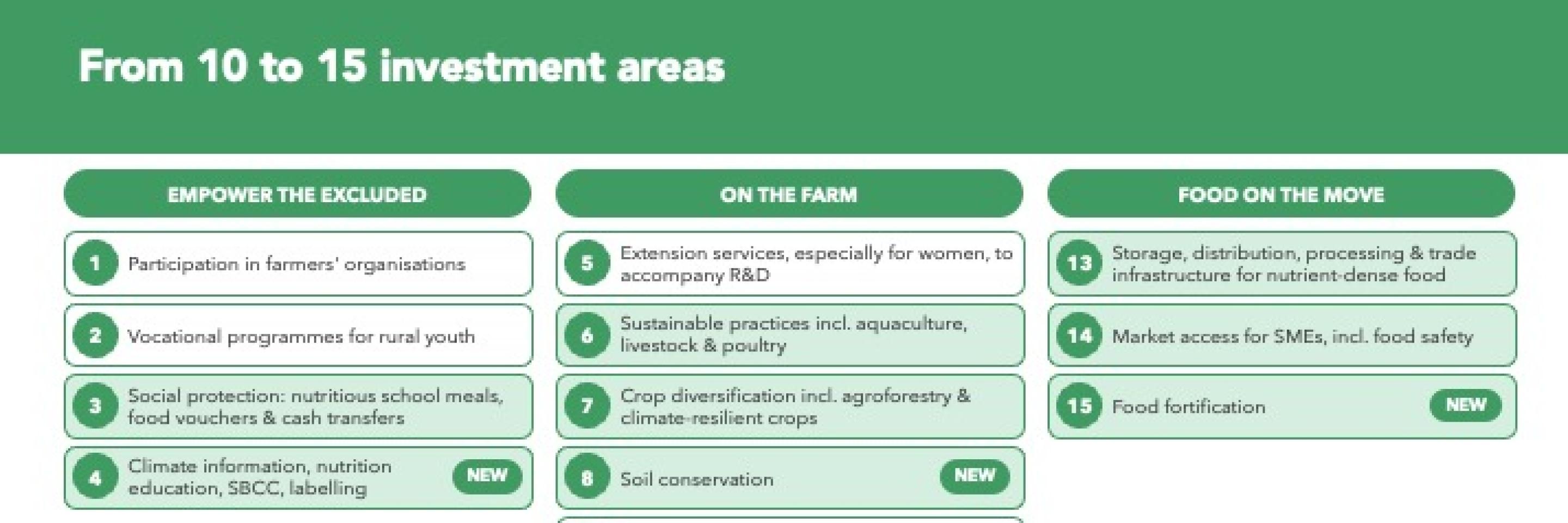
The new intervention list has updated six of the existing intervention areas and added five new intervention areas.
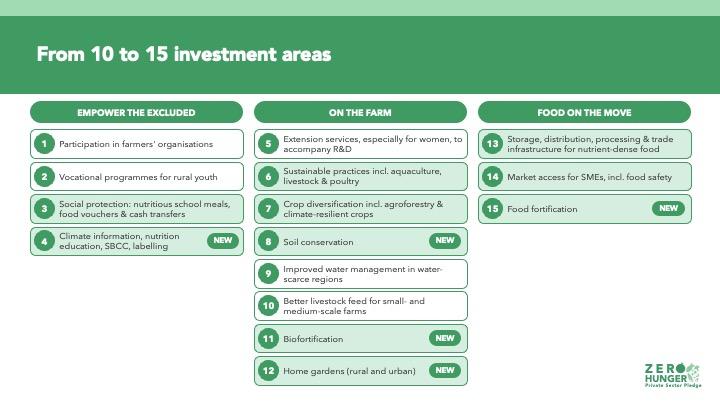
Empowering the excluded
Enabling participation in farmers' organisations.
Investing in vocational programs for rural youth offering integrated training in multiple skills.
Scaling up social protection programmes, including nutritious school meals, food vouchers and cash transfers. This intervention area has been updated to account for the findings on nutritious school meals as well as food vouchers and cash transfers in the Hesat2030 nutrition report.
Promoting climate and nutrition awareness, including through climate information, nutrition education, social and behavioural change communication, and labelling. This is new and includes research from the Hesat2030 nutrition and climate reports on shifting and influencing diet choices (nutrition education, SBCC, labelling, etc.) and climate information/ extension services.
On the farm
Investing in extension services, especially for women, to accompany R&D spending.
Promoting agricultural interventions to support sustainable practices that are economically viable for farmers, including sustainable aquaculture, livestock and poultry. This intervention area has been updated with findings from the Hesat2030 nutrition report on sustainable aquaculture and livestock.
Supporting crop diversification, including through agroforestry and the adoption of climate-resilient crops. This intervention area has been updated to include findings from the Hesat2030 nutrition and climate reports on crop diversification and agroforestry.
Enhancing soil conservation. This is a new intervention area based on the Hesat2030 climate report.
Scaling up farm-level interventions in water scarce regions, including improved water management. This intervention area has been updated to include findings from the Hesat2030 climate report on water management and soil conservation.
Improving the quality and quantity of livestock feed for small- and medium-scale commercial farms
Investing in biofortification. This is a new intervention area based on the Hesat2030 nutrition report.
Promoting home gardens (rural and urban). This is a new intervention area based on the Hesat2030 nutrition report.
Food on the move
Building storage, distribution, processing and trade infrastructure for nutrient-dense food and to reduce post-harvest loss and spoilage. This intervention area has been updated based on the findings from the Hesat2030 nutrition and climate reports.
Improving market access, namely investing in infrastructure, regulations, technical assistance (TA), including on food safety, to support SMEs in the value chain. This intervention area has been updated based on the findings from the Hesat2030 nutrition and climate reports on food safety and market access.
Investing in food fortification. This is a new intervention area based on the Hesat2030 nutrition report.
Company action needed
When agreeing to join the Zero Hunger Private Sector Pledge, companies must agree that their investment will align with at least one of these intervention areas. By expanding the intervention areas to incorporate the latest research from Hesat2030, companies have more opportunities to offer solutions that can ultimately end hunger while also addressing climate, equity and nutrition.